
How to Create Personalized and Relevant Messages that Increase Engagement and Marketing Effectiveness
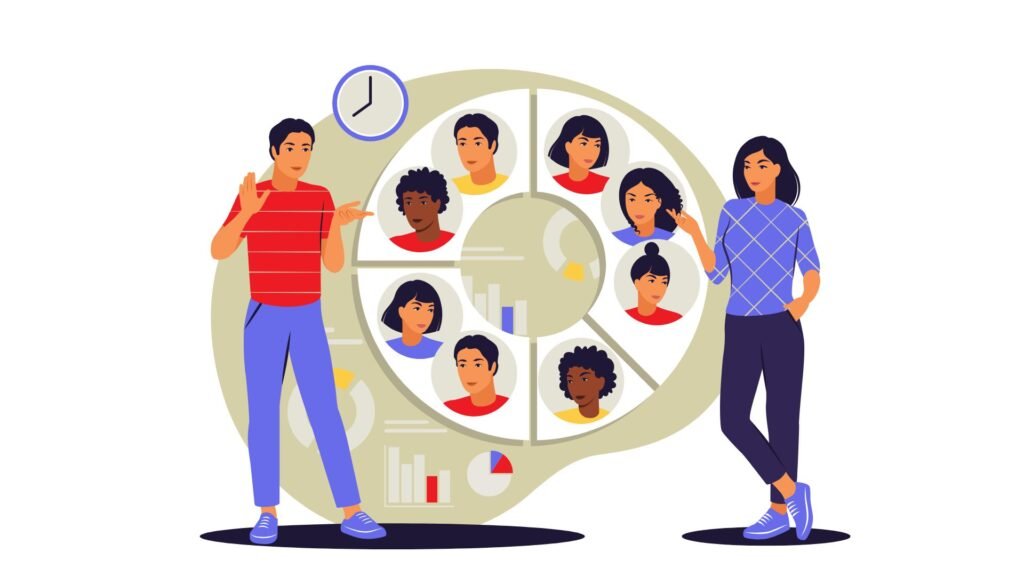
Data and User Segmentation: A Key Element of an Effective Marketing Strategy in Online Education
Segmentation of data and users is a key component of an effective marketing strategy in online education. By precisely dividing audiences into groups with similar characteristics and needs, we can deliver more personalized, relevant messages that increase engagement and the effectiveness of marketing activities. Well-executed segmentation also enables more efficient resource management and budget optimization, as it allows campaigns to be targeted precisely to the right people at the right time.
In this article, we will analyze which segmentation approaches work best in online educational marketing, how to collect the right data, how to use it, and how to segment users in order to tailor marketing activities to them effectively.
Why is Data Segmentation Important?
Without segmentation, our communication may be too generic, leading to audience disengagement. For example, sending the same message to all users without tailoring it to their needs can result in low campaign effectiveness. Data segmentation allows for:
Better personalization of messages: When we know details about our users (e.g., interests, level of expertise, educational goals), we can better tailor the educational offering to them.
Optimization of campaigns: Targeting communication to groups that are most interested in a particular course leads to higher conversion rates and lower advertising costs.
Understanding users: By analyzing user segments, we can better understand their behaviors and preferences, which helps improve the quality of educational offerings.
Step 1: Defining Segmentation Goals
Before diving into the technical aspects of segmentation, it’s important to start with clearly defined goals. In educational marketing, data segmentation should answer the following questions:
What are the goals of our educational campaign? (e.g., acquiring new participants for a course, promoting specialized programs, increasing engagement of current users)
Which user groups are most valuable to us? (e.g., people who have completed courses in the past, users who signed up for free materials, people looking for career development courses)
What data will allow us to effectively achieve these goals?
Step 2: What Data to Collect for Segmentation?
In educational marketing, we can collect various types of data to help with user segmentation. The most important types are:
Demographic data: Basic information about users such as age, gender, location, education level, or professional status, allows us to create basic segments. For example, high school students will have different educational needs than professionals looking for advanced courses.
Interests and educational goals: Collecting information about what courses or educational programs users are considering or what their career goals are helps create precise segments. For example, people interested in IT courses may require a different offering than those looking for management programs.
User engagement: Monitoring user activity on a website, app, or educational platform helps us understand who is more engaged and who might need additional support. For example, users who frequently access free materials may be more likely to sign up for paid courses.
Activity history: Information about whether a user has previously taken a course, subscribed to a newsletter, participated in a webinar, etc., allows us to create segments that might be more interested in special offers, such as discounts on future courses.
Purchase journey: Understanding at which stage of the purchase journey a user is allows for more precise marketing actions. For example, a user who just signed up for a free webinar might require a different approach than someone who has already purchased a full course.
Step 3: How to Conduct User Segmentation?
After collecting the relevant data, it’s time to process it and divide users into groups. There are many segmentation methods, but in educational marketing, two main strategies are commonly used: behavioral segmentation and demographic segmentation.
Behavioral Segmentation: This involves grouping users based on their behaviors, such as:
Participation in specific courses
Engagement with educational materials (e.g., watching videos, reading articles)
Purchase history (has the user purchased only one course or are they a regular customer?)
Activity during the sign-up process (e.g., filling out forms, abandoning forms)
Demographic Segmentation: This classic form of segmentation is based on data such as:
Age
Gender
Education
Location
Profession or professional status (e.g., student, professional, educator)
Segmentation Example:
Segment A: Younger people (18-25) who recently finished high school and are looking for career development courses, e.g., programming courses.
Segment B: People with higher education (25-40), working in the IT industry, who want to improve their skills through more advanced courses, e.g., project management courses.
Segment C: People over 40 looking for courses related to personal development, e.g., soft skills courses.
Step 4: What Tools to Use for Data Segmentation?
All this data must be properly processed and analyzed using tools that allow for easy segmentation. Some of them include:
Google Analytics: Allows us to collect data on user behavior on the website. This enables us to create reports showing which user segments are the most active.
CRM (Customer Relationship Management): CRM tools allow for the collection of contact information, user activity history, and enable segmentation based on this data.
Email marketing tools (e.g., Mailchimp, ActiveCampaign): These allow for segmentation of subscribers based on their interactions with email campaigns, enabling more tailored communication.
Social media analytics tools (e.g., Facebook Insights, Instagram Analytics): These allow for tracking engagement and user demographics on social media, helping to precisely target campaigns.
Step 5: Personalizing Communication
Based on the results of segmentation, we can deliver personalized content and offers. Personalization can include:
Dedicated course offers: For example, to a user who previously signed up for an IT course, we could offer an advanced course in the same field.
Course recommendations: Based on the user’s past choices, we can suggest additional courses that best align with their educational goals.
Sending relevant educational materials: For example, users interested in career development could receive regular tips on career growth and professional courses.
Conclusions
Data and user segmentation in online educational marketing is a crucial element that enables effective personalization of communication and tailoring marketing activities to the actual needs of the audience. Through segmentation, we can optimize campaigns, increase their effectiveness, and build more engaged and loyal communities. By using the right analytical tools and collecting data carefully, we can fully leverage the potential of educational marketing.
Curious to see how data can actually optimize your campaigns? In Part 3, we’ll dive into real-life examples that show how data-driven decisions can take your marketing efforts to the next level.